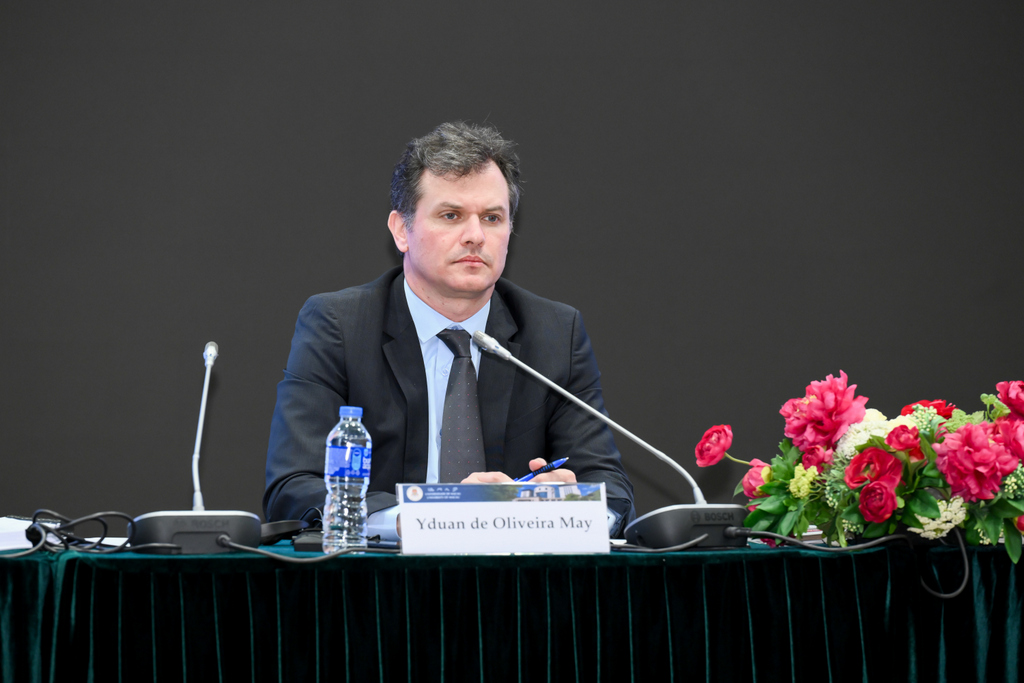
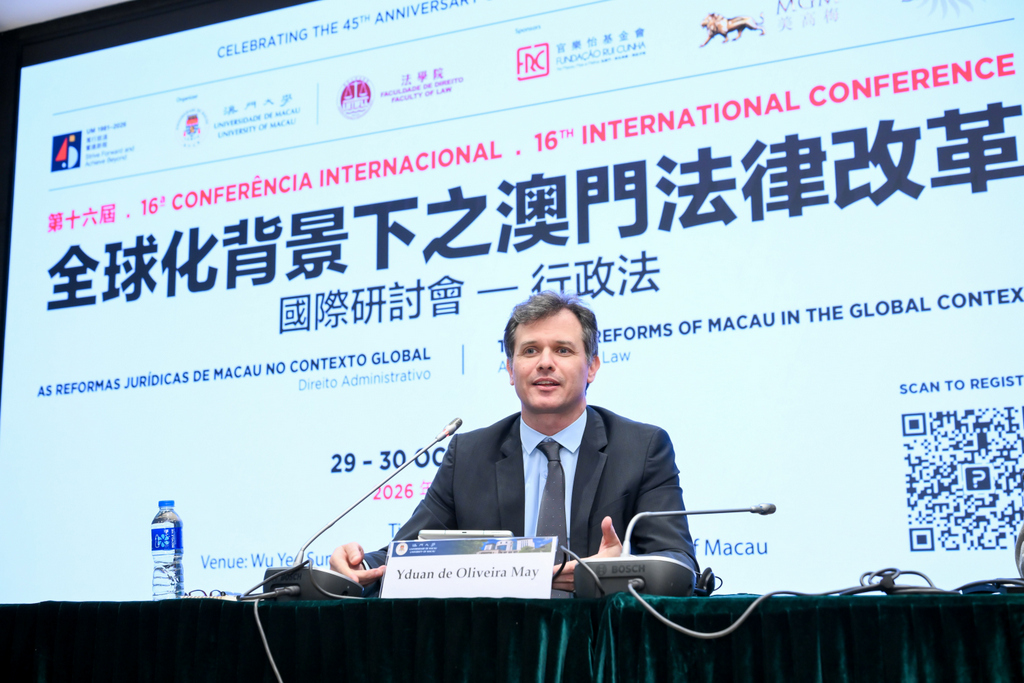
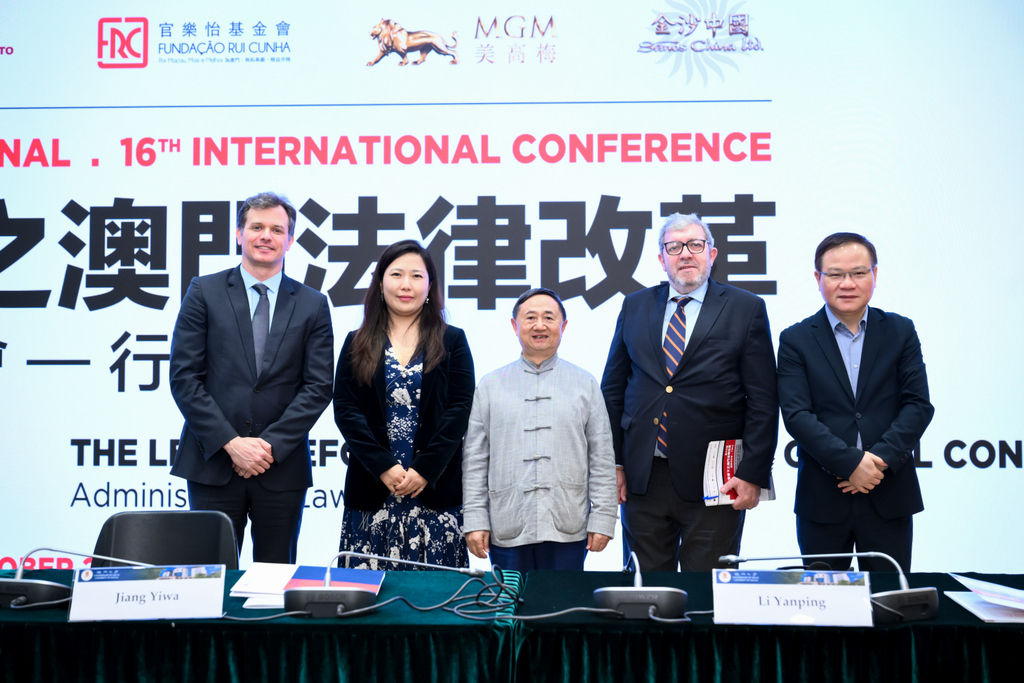
The exchange of knowledge and dialogue with international institutions marked the agenda of Professor Yduan de Oliveira May from the Graduate Program in Law (PPGD) at Unesc during his visit to Macau, China. From October 27 to 30, the professor participated in academic activities at two universities and was part of the program for the 16th International Conference – The Legal Reforms of Macau in the Global Context, presenting research developed at the University and contributing to discussions on global governance, sustainable development, and law.
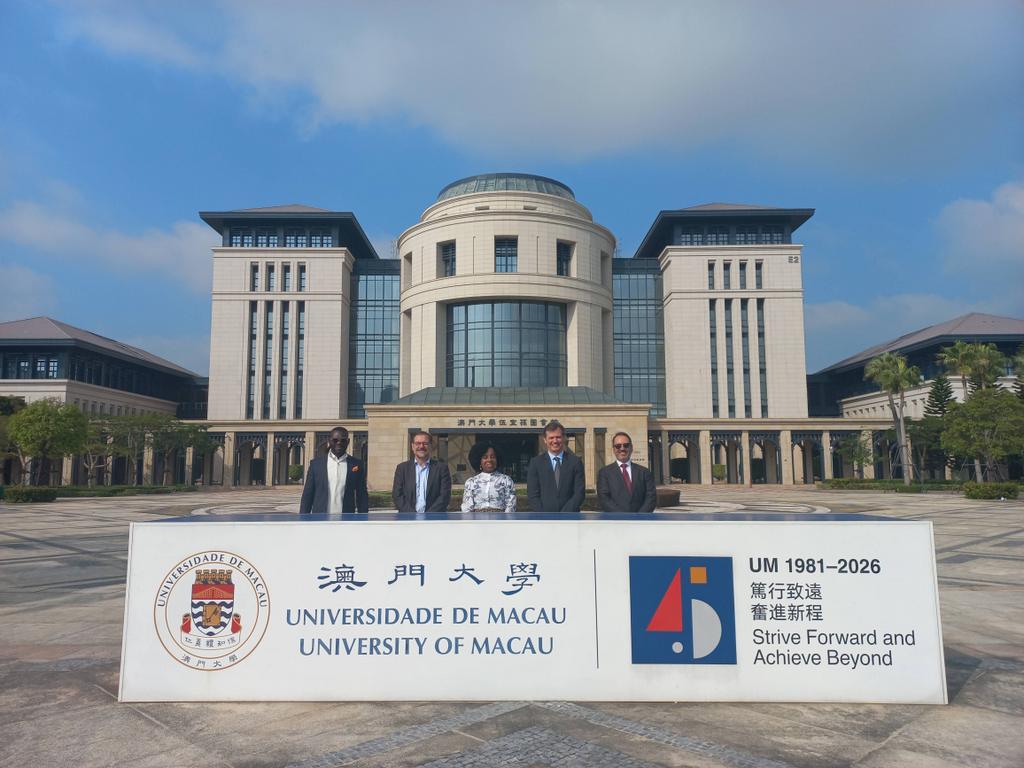
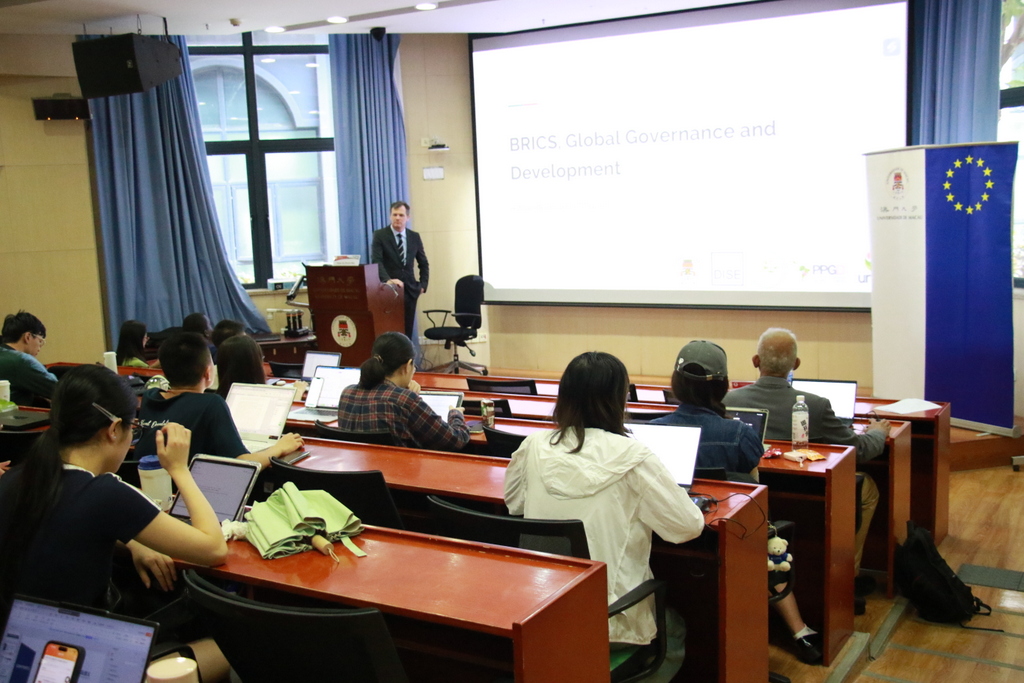
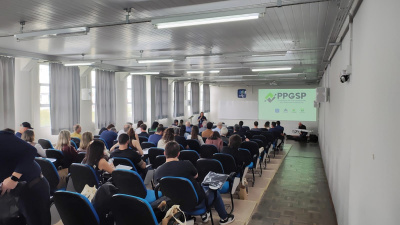
 The program began on October 27 at the University of Macau, where the professor delivered the seminar BRICS, Global Governance and Development. This activity was part of the institution's Jean Monnet Chair and kicked off the 2026-2027 series EU Law with a World Outlook.
Under the coordination of Professor Paulo Canelas de Castro, director of the Master's and Doctoral Programs and Research and Extension at the Faculty of Law, the meeting was organized by the research circles European Union Law and Economic Law Study, with support from the Institute of European Studies of Macau.
During the seminar, conducted in English, Yduan addressed the socioeconomic development mechanisms of BRICS and their impacts on global governance. Topics discussed included diplomatic strategies among countries, the role of the New Development Bank, and the integration of the Global South in building joint pathways for development, inclusion, and prosperity. 
"Participating in an academic space like this allows us to present the reflections developed at Unesc and establish a dialogue with researchers from different realities. These are opportunities to share knowledge and broaden perspectives on issues that have global repercussions," emphasizes the professor. On this occasion, Yduan also presented reflections from the PPGD and the DISE research group on the topic.
Academic Cooperation and Sustainable Development
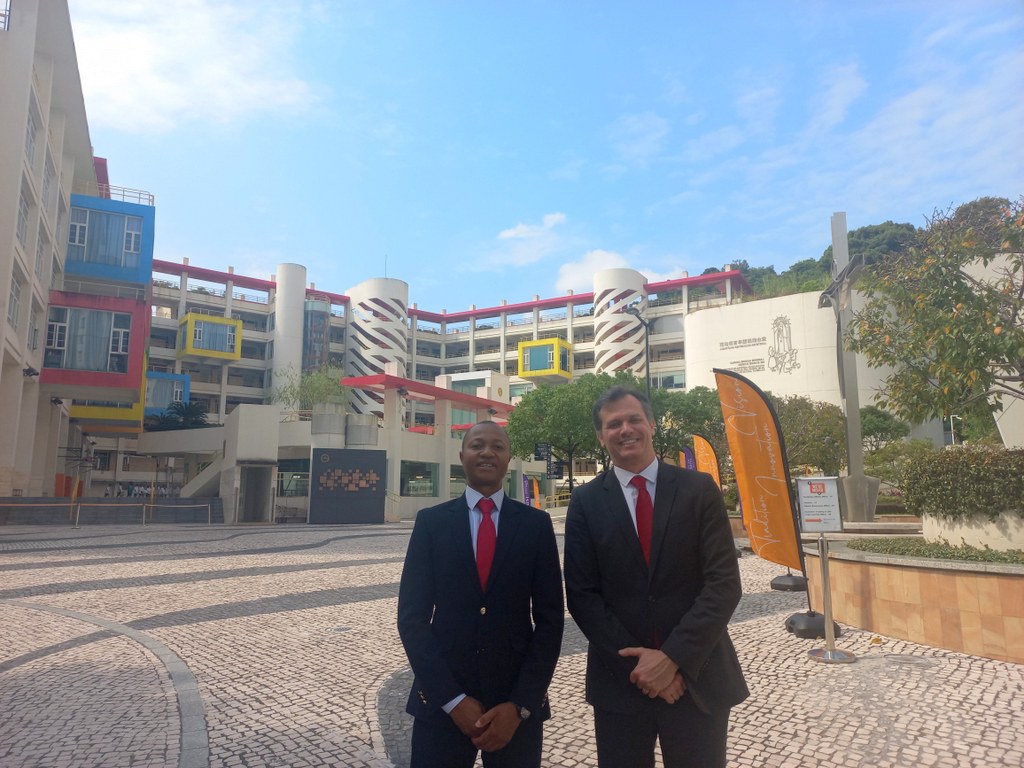
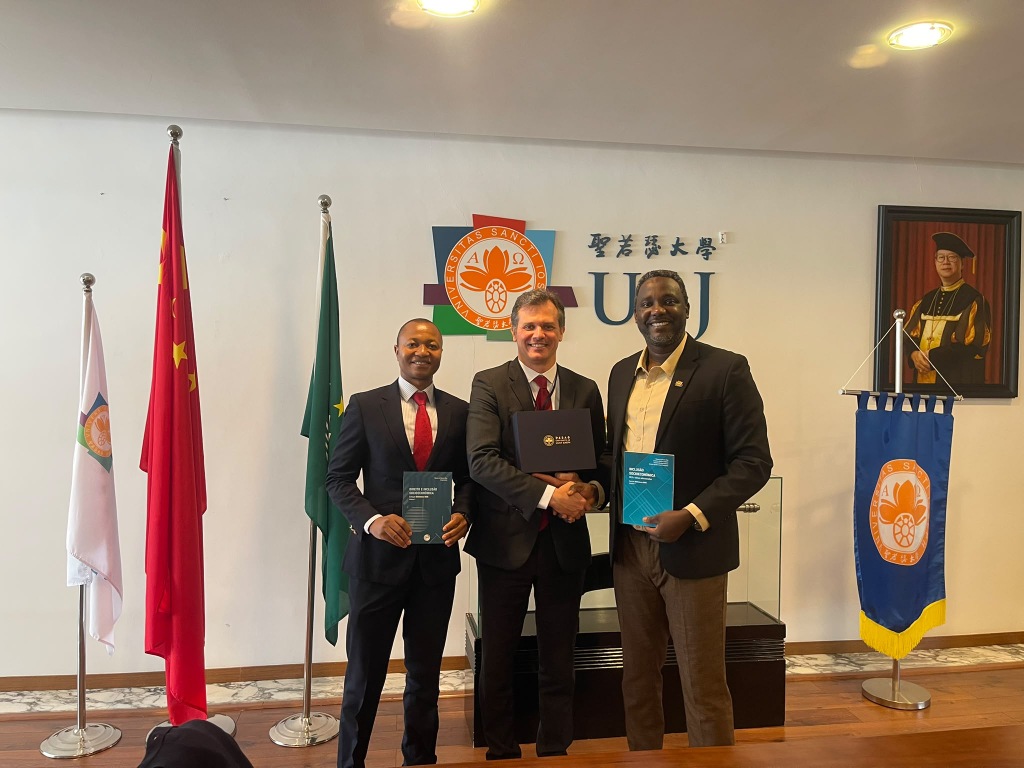
On October 28, the agenda was dedicated to the University of Saint Joseph, also located in Macau. The visit aimed to enhance institutional dialogue and explore new possibilities for cooperation. Unesc has maintained a memorandum of understanding with the institution since May 2024, which provides for the development of research, organization of joint events, and exchange of students and professors.
On this occasion, Yduan, representing the PPGD, met with Professor Ansoumane Douty Diakité, director of the Department of Law and Public Policies, who represented the dean of the Faculty of Business and Law, Professor Jenny Oliveros Phillips. The meeting also included Professor Ângelo Patrício Rafael.
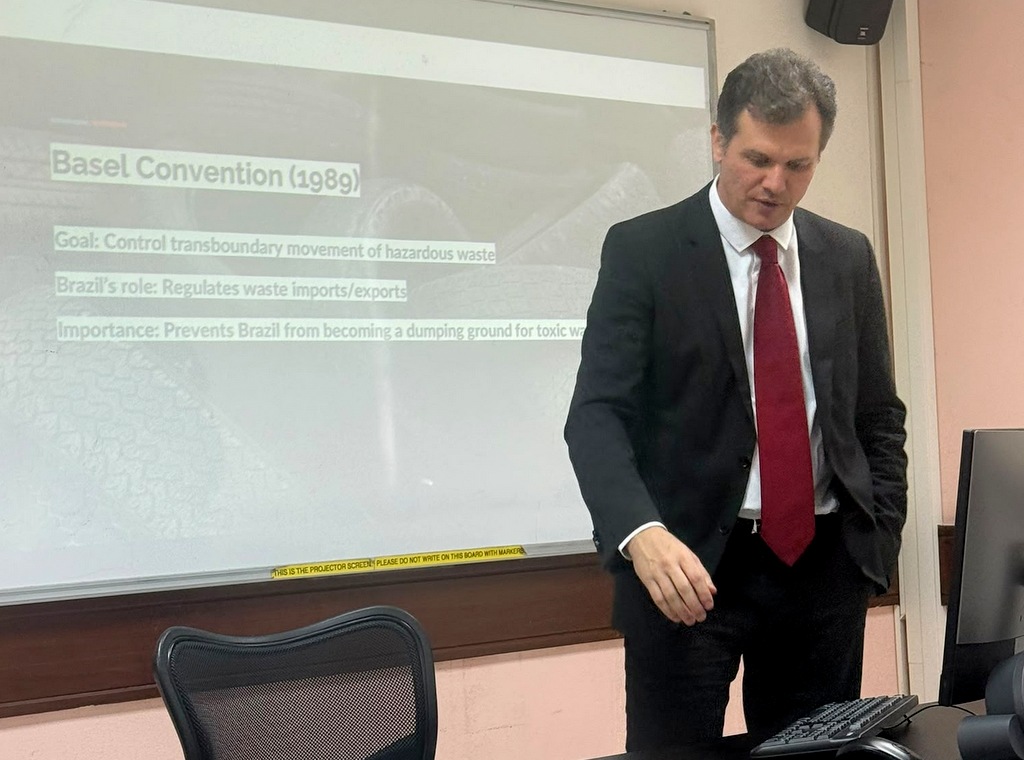
 Subsequently, the Unesc professor taught a guest lecture titled Environmental Governance, Law and Sustainable Development Goals in Brazil. Also in English, the activity addressed environmental responsibilities and their relationships with the development of emerging countries, such as Brazil. Students from China, Macau, Myanmar, and Portugal attended the presentation.
"Discussing environmental governance from the Brazilian experience with students from different countries is an opportunity to present our challenges and also to learn about other perspectives. Sustainable development requires dialogue and cooperation among different realities," points out Yduan.
Brazilian Research at an International Conference
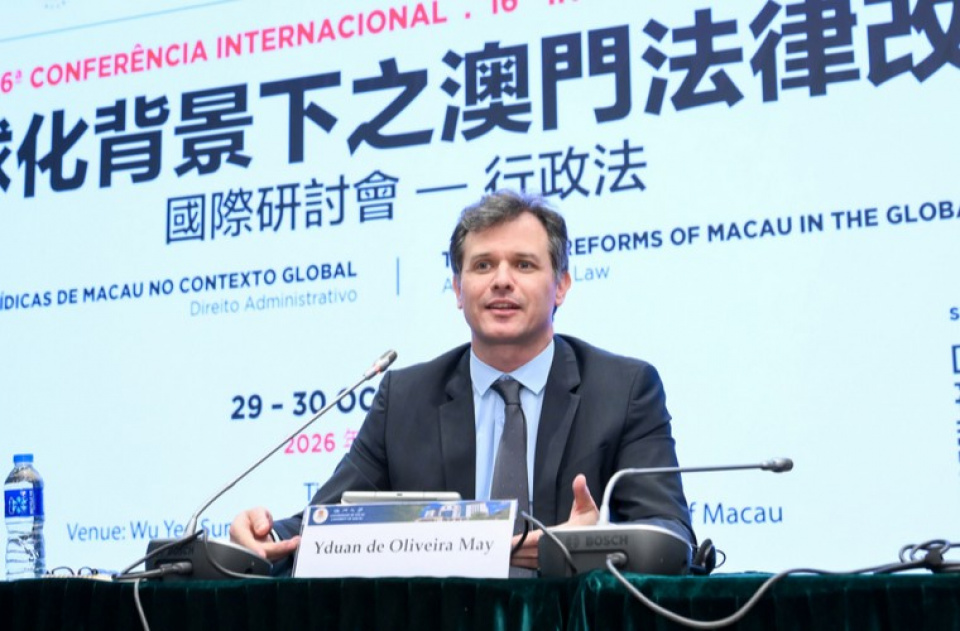
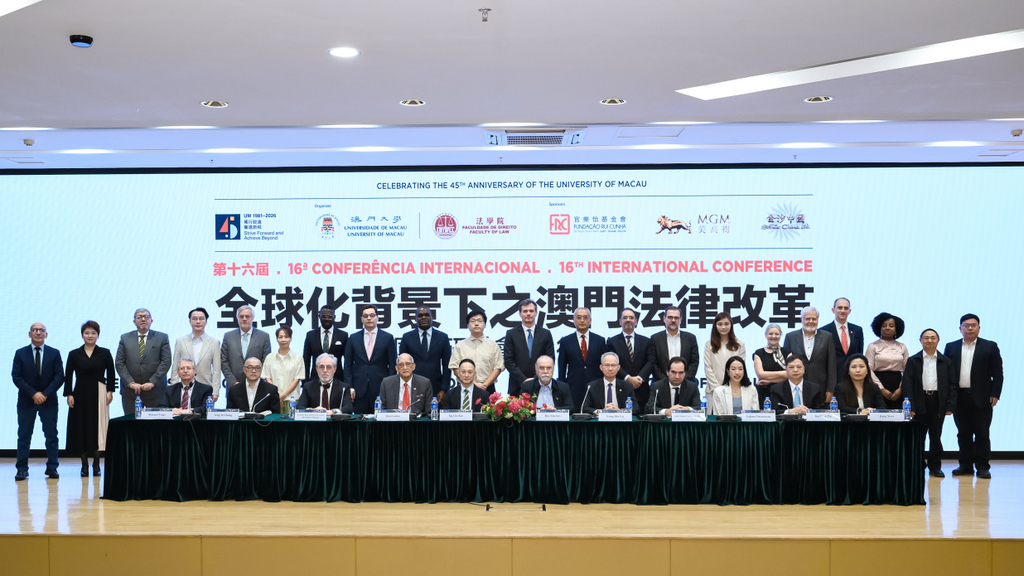
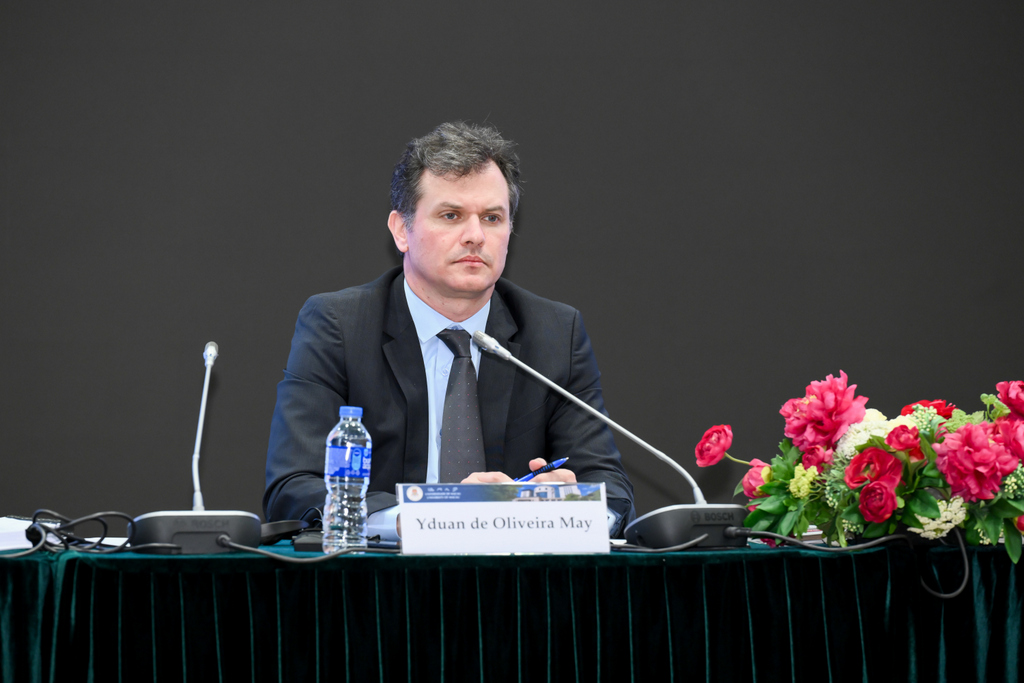
On October 29 and 30, Yduan participated in the 16th International Conference – The Legal Reforms of Macau in the Global Context. As the only Brazilian representative at the event, the professor coordinated a working table alongside Professor André Móz Caldas from the University of Lisbon.
The conference brought together researchers and professors from institutions in Macau, Mozambique, and Portugal. During the program, Yduan presented the work titled The Contracting Laws of Macau and Brazil from the Perspective of Sustainable Economic Development, which will be published in an edition by the University of Macau.
The study establishes a comparative analysis between Brazil's Public Procurement and Administrative Contracts Law (Law No. 14.133/2021) and Macau's Public Procurement Law (Law No. 10/2025), considering the Sustainable Development Goals (SDGs) of the 2030 Agenda.
The research organizes the comparison into three dimensions: social, environmental, and economic-institutional. In the social dimension, it examines how the legislations contribute to productive inclusion and the reduction of vulnerabilities. In the environmental dimension, it evaluates the presence of ecological criteria in public procurement and the contribution of these norms to a low-carbon economy. In the economic-institutional aspect, it analyzes governance instruments, electronic transparency, and incentives for the participation of small businesses.
Among the findings, the study identifies a greater alignment of Brazilian legislation with SDGs 5, 8, 9, 12, and 13, while Macau's legislation stands out in SDGs 9, 11, and 16. "One of the important points of the research is to demonstrate how public procurement can contribute to objectives that go beyond the acquisition of goods and services. The legislations can also serve as instruments for socioeconomic inclusion, sustainability, and development," explains the professor.